Is your infrastructure holding you back? Explore the benefits of CI/CD modernization and how a cloud native DevOps strategy speeds up your delivery and reduces errors.


.svg)
.svg)
The days of waiting months for a software update are gone. In today's market, speed is the primary currency. Companies that cannot move fast often find themselves replaced by leaner, more agile competitors. To stay ahead, many engineering leaders are looking toward modern DevOps pipelines to bridge the gap between writing code and delivering value to users. By the end of 2027, industry experts predict that over 90% of global enterprises will have fully transitioned to automated, self-healing deployment systems to maintain their competitive edge. This shift is not just about a few new tools. It is about a fundamental change in how we think about the journey from a developer’s laptop to a live production environment. Modern software development demands a level of coordination that traditional methods simply cannot provide. When we talk about modernization, we are discussing the removal of friction. Friction exists in manual handovers, in poorly documented environments, and in the fear of pushing a button that might break a system. To overcome this, organizations must embrace a philosophy where automation is the default rather than the exception.
Traditional deployment methods often rely on manual hand-offs and siloed departments. One team writes the code, another tests it, and a third team is responsible for the actual go-live event. This fragmented approach creates bottlenecks and increases the risk of human error. When a pipeline is outdated, even a small bug fix can take days to deploy. Modernization solves this by treating infrastructure as code. Instead of manual configurations, everything is scripted and version-controlled. This leads to rapid software deployment because the path to production is pre-cleared and repeatable. When you automate the boring, repetitive parts of software delivery, your best engineers can spend more time solving complex problems and less time babysitting a deployment script. Furthermore, legacy systems often suffer from configuration drift. This happens when small, undocumented changes are made to servers over time, making them unique and impossible to replicate. Modern pipelines eliminate this risk by ensuring that every environment is created from the same blueprint. If a server acts up, you do not fix it. You destroy it and let the pipeline create a new one that is guaranteed to be correct.
To build a pipeline that supports high-velocity growth, you need to look at several core components. It starts with visibility and ends with a seamless feedback loop.
The integration of these pillars creates a resilient framework. For instance, when security is baked into the automated tests, developers receive immediate feedback if they introduce a library with a known vulnerability. This prevents the security team from becoming a gatekeeper that stops production at the last second, which is a common cause of delays in older models.
The heart of any modern tech stack is the Continuous Integration and Continuous Delivery (CI/CD) process. Many organizations struggle with CI/CD modernization because they try to force old habits into new tools. A truly modern pipeline does not just automate the status quo. It improves it. Continuous Integration ensures that code from different developers is merged and tested frequently. This prevents the integration hell that occurs when teams wait weeks to combine their work. Continuous Delivery takes it a step further by ensuring that the code is always in a deployable state. In a modernized environment, every successful build is a candidate for production. This reliability is what allows companies to deploy multiple times a day with confidence.
Modernizing this process also involves optimizing the feedback loop. If a build fails, the developer should know why within minutes, not hours. High-performing teams use specialized runners and parallel testing to ensure that the CI/CD pipeline is a highway, not a parking lot. By investing in the performance of the pipeline itself, you empower your developers to stay in the flow state, leading to higher quality code and faster delivery.
Cloud environments offer scalability that on-premise servers simply cannot match. However, just moving your apps to the cloud is not enough. A successful cloud native DevOps strategy involves designing your applications specifically to live in a distributed, containerized world. Using technologies like Docker and Kubernetes allows for immutable infrastructure. This means instead of patching a running server, you replace it with a new, updated version. This approach eliminates configuration drift, where different environments such as development, staging, and production slowly become different from each other. When your environments are identical, you eliminate the classic excuse: it worked on my machine. A cloud native approach also allows for better cost management. By using serverless functions or auto-scaling clusters, your infrastructure grows and shrinks based on actual demand. This efficiency is a hallmark of a modern pipeline. You are no longer paying for idle hardware, and you are no longer limited by the physical capacity of a data center.
Overcoming the Cultural Barrier
Technology is only half the battle. The biggest hurdle to modernizing your pipeline is often the culture of the organization. Teams must move away from a culture of blame and toward a culture of post-mortems and shared responsibility. In a modern setup, developers take more responsibility for how their code performs in production, and operations teams provide the platforms that make that possible. This collaboration is what defines the DevOps movement. Without this cultural shift, even the most expensive tools will fail to deliver the speed you are looking for.
Trust is the most important component of this culture. Leadership must trust that the automated tests are sufficient, and engineers must trust that the system will support them if something goes wrong. When everyone is aligned on the goal of delivering value quickly and safely, the technical challenges become much easier to solve. This alignment is often achieved through shared metrics, such as deployment frequency and lead time for changes.
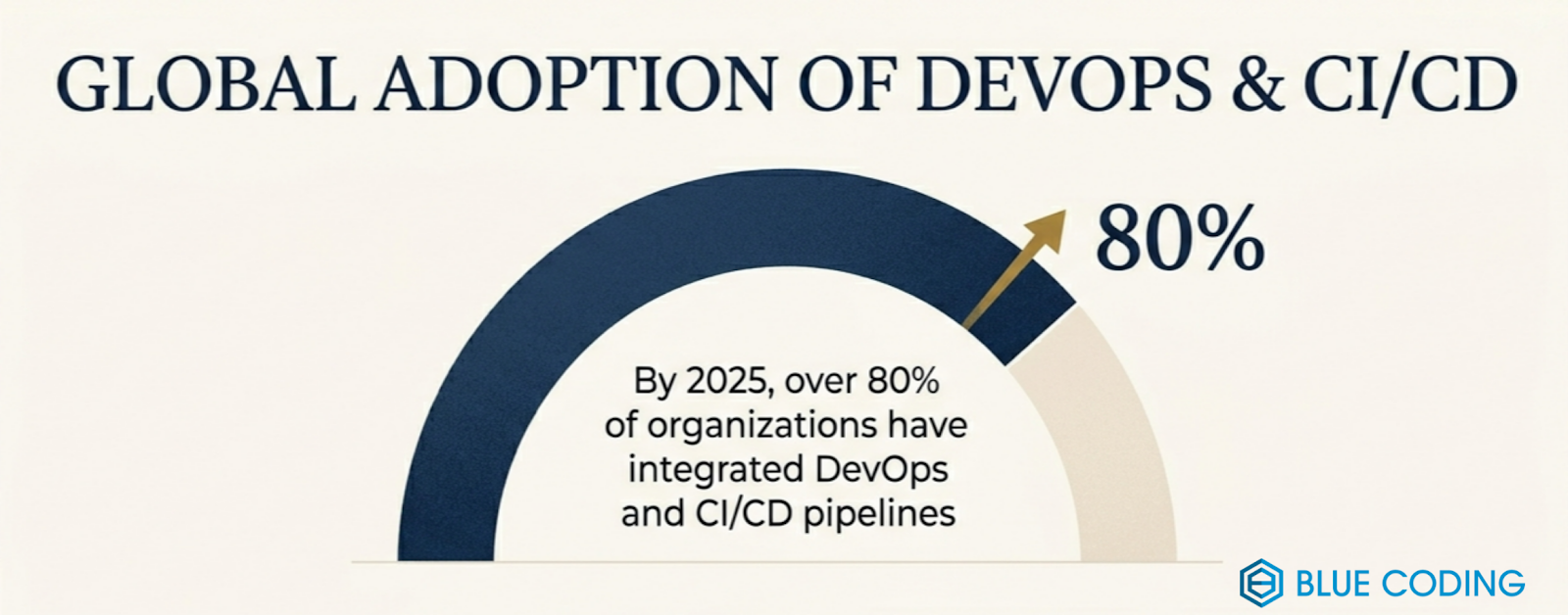
Transitioning to a cloud native DevOps strategy requires a clear roadmap. You cannot change everything overnight. Start by identifying the biggest bottleneck in your current process. Is it manual testing? Is it a slow approval process? Or is it the lack of a staging environment that matches production? Fixing these pain points one by one builds momentum. As your team sees the benefits of modern DevOps pipelines, such as fewer late-night emergency fixes and faster release cycles, the appetite for further CI/CD modernization will grow. The result is a more resilient, scalable, and ultimately more profitable business. In the long term, the focus should shift toward developer experience. A modern pipeline should be invisible. It should work so well that developers do not have to think about it. They push code, and the system handles the rest. This level of maturity allows your organization to scale without adding proportional amounts of overhead or stress.
To reach the highest level of efficiency, organizations should also focus on the granularity of their deployments. Instead of large, monolithic releases that happen once a month, modern pipelines favor small, incremental changes. This reduces the blast radius of any single deployment. If a small change causes an issue, it is much easier to identify and fix than a massive update containing hundreds of different changes.
This incremental approach also allows for better A/B testing and canary deployments. You can roll out a new feature to 5% of your users, monitor the performance, and then gradually increase the rollout as your confidence grows. This is the gold standard of rapid software deployment because it balances speed with extreme safety.
Furthermore, documentation should be integrated into the pipeline. When the documentation is generated automatically from the code and the infrastructure scripts, it is always up to date. This prevents the common problem of stale wiki pages that lead to confusion and errors during critical moments.
Building a world-class engineering engine is a complex journey, but you do not have to navigate it alone. Blue Coding helps businesses master the hurdles of digital transformation and technical scaling. Whether you need to bring in specialized talent to bridge a gap or require a strategic roadmap to restructure your internal workflows, our team is dedicated to supporting your expansion. We understand the high-stakes environment of modern software engineering and provide the tailored solutions needed to keep your systems fast and resilient. If you are ready to optimize your current setup, we offer a first free call for queries to dive into your specific goals and explore how we can help you lead the market.


Subscribe to our blog and get the latest articles, insights, and industry updates delivered straight to your inbox