High costs and talent shortages are driving the shift toward custom AI agents development. Learn why top firms use nearshore AI engineers to gain a competitive edge.


.svg)
.svg)
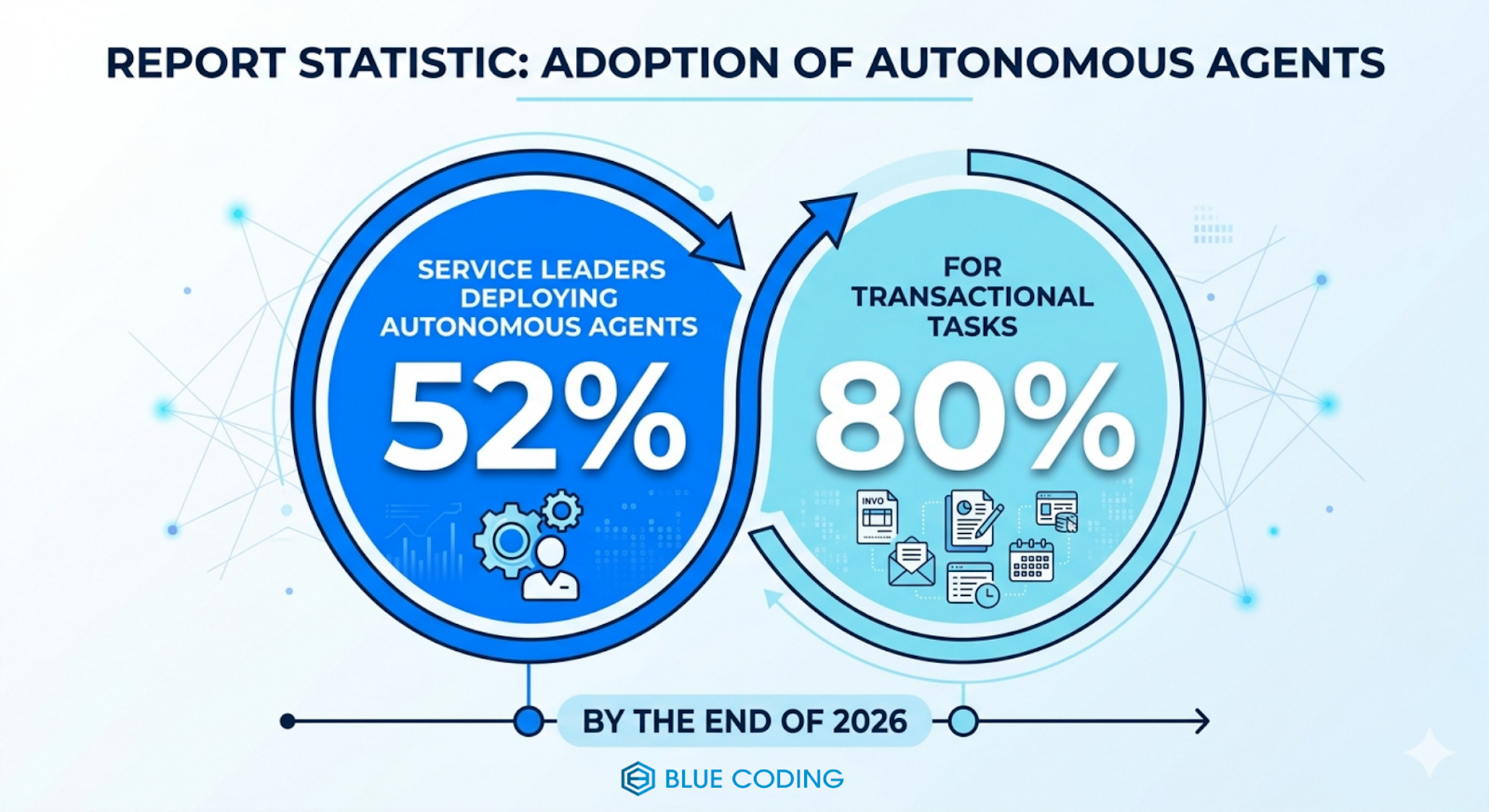
Business services firms are currently in the middle of a massive structural shift. It is no longer enough to just provide human expertise. The goal is now operational orchestration. According to industry data, over 52% of talent and business service leaders are already deploying autonomous agents to handle up to 80% of their transactional tasks by the end of 2026. As the U.S. staffing and services market hits a 183 billion dollar valuation, the focus has moved from volume to pure efficiency. This is why so many firms are looking toward Latin America to hire nearshore AI engineers who can build the custom tools needed to stay competitive.
For a long time, companies used off-the-shelf AI. They bought subscriptions to general tools and hoped for the best. But business services like legal, accounting, and HR deal with very specific data and complex workflows. Generic tools often fail because they do not understand the nuances of a firm's specific client history or internal processes. This has led to a surge in custom AI agents development. Unlike a standard chatbot, an autonomous agent can actually do things. It can observe a system state, plan multi-step actions, call specific APIs, and even learn from its own mistakes. For a business services firm, this might mean an agent that does not just draft an invoice, but actually cross-references it with contract terms, checks for compliance, and sends it to the client for approval without a human ever touching it.
Building these agents is technically difficult. It requires a mix of machine learning knowledge, system design, and the ability to integrate AI into existing ERP and CRM systems. U.S. based talent for these roles is incredibly expensive and in short supply. This is where the nearshore model wins. When we talk about AI outsourcing for business services, proximity is the most important factor. Here is why firms are choosing nearshore over far-offshore options like Asia:
The reason for this hiring trend becomes clear when you look at the results. The firms that are winning are the ones moving from human-executed to autonomously executed workflows.
By hiring nearshore AI engineers, firms are building agents that handle:
The U.S. is currently facing a shortage of about 250,000 tech roles, and AI-specific skills are the hardest to find. Latin America has stepped up to fill this gap. Countries like Mexico and Brazil are now producing over 600,000 software engineers every year. These engineers are not just generalists. They are specializing in frameworks like PyTorch and TensorFlow, which are essential for custom AI agents development. Business services firms realize that they do not just need coders. They need systems thinkers. They need people who can design the architecture that allows an AI agent to operate within a secure, governed environment. By tapping into the nearshore market, they get access to this high-level talent without the extreme overhead of local hiring in tech hubs like San Francisco or New York.
In the current market, the first-mover advantage is real. If your competitor automates their back-office 12 months before you do, their margins will be significantly higher, allowing them to underbid you on every contract.
AI outsourcing for business services through a nearshore partner allows firms to scale up in weeks rather than months. Many nearshore partners can provide pre-vetted AI specialists who are ready to integrate directly into your existing squads. This prevents roadmap stall and ensures that your digital transformation stays on track.
One of the main reasons why companies hire nearshore AI engineers for custom agents is the complexity of the tech stack. Modern AI agents require a sophisticated setup that includes:
Nearshore engineers in Latin America have spent the last several years mastering these specific technologies. Because they are often integrated into U.S. companies as staff augmentation, they stay on the cutting edge of what works in a corporate environment.
For business services, data is the most valuable asset. Giving an AI agent access to client records or financial data carries risk. This is another area where AI outsourcing for business services via nearshore teams provides an advantage.
Unlike teams in jurisdictions with vastly different data laws, nearshore partners in the Americas often align their security protocols with U.S. standards like SOC2 or HIPAA. Working in a similar legal and business environment makes it easier to enforce strict data governance. When you hire nearshore AI engineers, you can ensure that the custom agents they build are following your specific security guidelines from day one.
Hiring a single engineer to build a one-off tool is a mistake. The firms that succeed are those that view custom AI agents development as a long-term strategic pillar. This means building a team that can maintain, update, and improve these agents as new models become available.
The nearshore model supports this long-term view. High retention rates in Latin American tech hubs mean that the engineers who build your system are likely to be there to support it a year later. This continuity is vital for complex AI systems that require deep knowledge of the underlying data architecture.
To understand the financial impact, consider a typical business services firm with 500 employees. If custom agents can automate just 20% of the manual data entry and document review tasks, the firm recovers thousands of hours of billable time every month. By utilizing nearshore AI engineers, the cost of developing these systems is significantly reduced. This makes the return on investment much faster. Instead of waiting three years to see a profit from your AI investment, many firms see a positive impact within the first six to nine months.
Blue Coding helps companies navigate this transition by providing access to the top 10% of tech talent in Latin America. Whether you are looking for specialized nearshore AI engineers or a full team for custom AI agents development, we handle the vetting and placement so you can focus on your strategy. We know that choosing the right partner is a big decision, which is why we offer a first free call for any queries you have about scaling your team. Contact us now to book your call!


Subscribe to our blog and get the latest articles, insights, and industry updates delivered straight to your inbox