Modern telecommunications face a data crisis that traditional cloud setups cannot solve. By moving processing power closer to the source, networks achieve the ultra-low latency required for 5G and IoT applications. This shift to the edge reduces bandwidth costs, improves security, and enables real-time decision-making for mission-critical services.

.svg)
.svg)
The digital world is moving faster than the cables buried beneath our feet can handle. As we look toward the next few years, the sheer volume of information is staggering. Analysts predict that by 2027, over 75% of enterprise-generated data will be created and processed outside a traditional centralized data center or cloud. This shift is not just a trend but a survival tactic for networks. For a long time, we sent every byte of data to a giant server farm hundreds of miles away. But with the rise of autonomous vehicles, remote surgery, and smart cities, that trip is now too long. Telecommunications networks must process data at the edge to keep up with a world that no longer has patience for a loading icon.
In the old model, your phone or device acted like a mailbox. It collected info and sent it to a central office. That office processed it and sent an answer back. This worked fine for scrolling through social media, but it fails when a self-driving car needs to decide whether to brake in a millisecond.
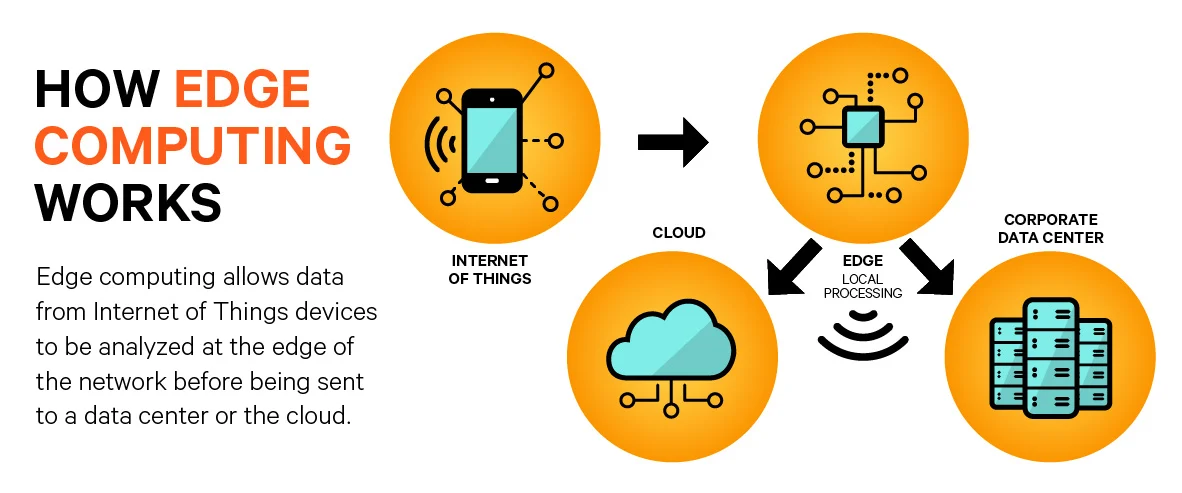
When we talk about edge computing for telecom, we are talking about moving the brain of the network to the edge, such as the cell towers, routers, and local hubs. By doing this, we kill the lag. Instead of a round trip across the country, data only travels a few miles. This is the only way to achieve the sub-10ms latency that modern industries demand. Without this change, the promise of a fully connected world remains a dream.
To make this work, telecom companies are upgrading their infrastructure. A cell tower is no longer just a pole with antennas. It is becoming a micro-data center. This evolution is the backbone of telecom edge processing. By placing high-performance servers at the base of these towers, providers can analyze traffic patterns and user behavior instantly. This reduces the backhaul traffic, which is the heavy lifting of moving data into the core network.
Many people think 5G is just faster internet. While it does provide more lanes on the digital highway, those lanes still lead to a bottleneck if the destination is a distant cloud. This is where 5G edge computing solutions come into play.
5G provides the high-speed connection, but edge computing provides the high-speed logic. Without the edge, 5G is like a Ferrari stuck in peak-hour traffic. When you combine the two, you get a network capable of handling thousands of devices in a single square kilometer without a drop in performance. This is essential for Massive IoT, where everything from your fridge to the city streetlights is constantly talking to the network.
In many industries, a delay is not just annoying. It is expensive or dangerous. Think about a factory using robots to assemble delicate electronics. If a sensor detects a misalignment, that information needs to be processed immediately to stop the line. Real time network data processing at the edge allows these industrial systems to react in the blink of an eye. If the data had to go to a central cloud, the robot might have already ruined a dozen parts before the stop command returned.
Bandwidth is expensive. Sending terabytes of raw video footage from thousands of security cameras to a central cloud costs a fortune. Most of that footage is useless, often just hours of empty hallways.
With edge computing for telecom, the network can be smart. It can process the video locally, recognize when something important happens, like a person entering a restricted area, and only send that specific clip to the main server. This filtering at the source saves massive amounts of bandwidth and storage costs. It turns the network from a dumb pipe into a strategic filter that only moves what truly matters.
As more people stream 4K video and work from home, the core of our internet is getting crowded. During peak hours, even the best networks can crawl. Processing at the edge acts like a relief valve. By handling real time network data processing locally, we take the pressure off the central pipes. If a neighborhood is all watching the same popular show, the edge node can cache that content and serve it locally. This keeps the rest of the network clear for other tasks, ensuring that a teenager's gaming session does not slow down a professional's video call.
A giant central data center is a big, tempting target for hackers. If you get inside, you have everything. Processing data at the edge changes the security game. It creates a distributed defense.
When telecom edge processing is used, sensitive data can be analyzed and even deleted locally without ever touching the public internet or a central hub. For example, a hospital can process patient vitals at the edge. The data stays within the local network, reducing the surface area available for a cyberattack. It is much harder to hack 1,000 small, local nodes than it is to target one central vault that contains all the records.
We are on the verge of a breakthrough in Augmented Reality and Virtual Reality. For these to feel real, the digital overlay must move perfectly with your head movements. If there is even a tiny delay, the user gets motion sickness. Current 5G edge computing solutions are the only way to make mobile AR viable. The heavy graphics processing happens at a nearby edge node, and the result is streamed to the headset instantly. This removes the need for bulky, expensive hardware on the user's head, making the technology lighter and more accessible to everyone.
For telecommunications companies, moving to the edge is not just about better service. It is about new revenue. By offering edge hosting, telecom providers can compete with traditional cloud giants. They can sell compute power directly to developers who need their apps to run as fast as possible. This turns the telecom provider from a utility company into a platform. It allows them to host the next generation of apps that have not even been invented yet, ensuring they stay relevant in an increasingly competitive market.
The transition to the edge is not something that can be delayed. The hardware being installed today will define how the internet functions for the next decade. Networks that stick to the old centralized model will find themselves unable to support the apps of tomorrow.
An often overlooked benefit of edge processing is its impact on energy consumption. Sending massive amounts of data across long distances requires a significant amount of power. By processing data locally and only sending what is necessary, we can reduce the overall energy footprint of our digital infrastructure. When telecom edge processing becomes the standard, we move toward a greener internet.
Ultimately, the end user does not care about where the data is processed. They care about whether their app works instantly. Edge processing is the invisible engine that makes this happen. As we move toward a world where billions of devices are connected, the strain on central hubs will only increase. By distributing the load, we ensure that the quality of service remains high even as demand explodes. In a global economy, speed is a currency. Companies that can process data at the edge will have a distinct advantage over those waiting for the cloud to respond.
The integration of edge computing for telecom is the final piece of the digital transformation puzzle. It bridges the gap between raw connectivity and intelligent action. As we move into an era defined by AI and automation, the distance between a thought and an action must be zero. The edge is the only place where that is possible. It is the foundation for a smarter, faster, and more secure digital world. The journey from centralized to distributed computing is a natural progression of technology. We have seen this cycle before, and each time, it leads to a surge in innovation. The edge is the new frontier where the physical and digital worlds meet.
Blue Coding specializes in helping companies navigate the complex world of software and network infrastructure. Whether you are looking to optimize your data flow or build applications ready for the next generation of connectivity, we provide the technical talent to make it happen. We believe in clear communication and direct results, which is why we offer a first free call for any queries you have about your current setup or future projects. Let us discuss how we can help you stay ahead of the competition. You can contact us now to schedule your free call!


Subscribe to our blog and get the latest articles, insights, and industry updates delivered straight to your inbox